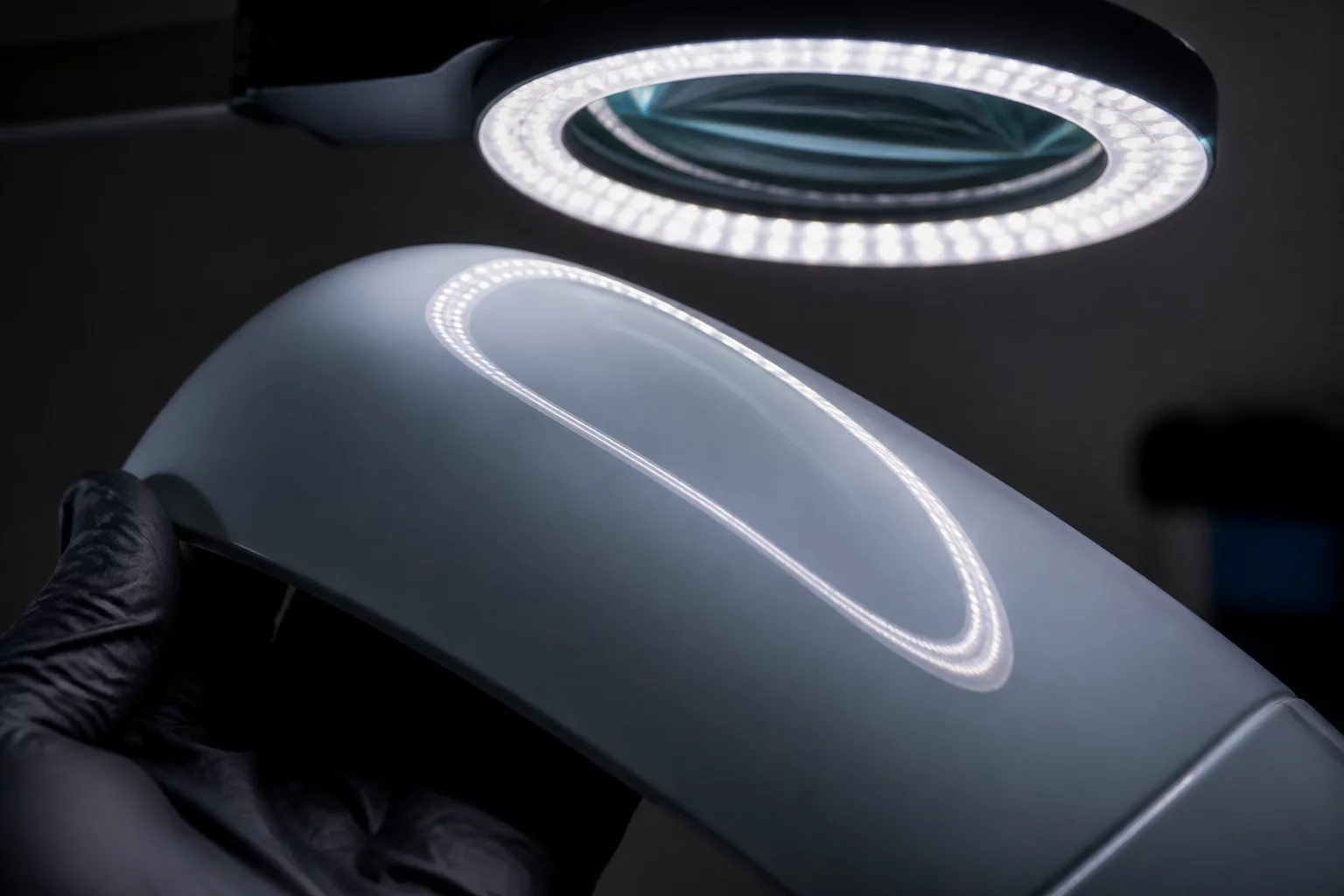
Visual quality in additive manufacturing is often a subjective metric, making Cosmetic Acceptance Criteria (CAC) one of the most debated aspects of part verification. Unlike functional criteria, which rely on hard mechanical data, cosmetic standards define the acceptable level of visual anomalies that do not compromise the part's performance but affect its professional appearance. In high-end consumer goods, aerospace interiors, and medical housings, the surface finish is just as critical as the dimensional accuracy.
The first step in establishing a robust CAC is defining the 'Viewing Distance' and 'Viewing Conditions.' Most industrial standards, such as those adapted from injection molding, suggest an inspection distance of 500mm under 1000-lux lighting. If a defect is not visible under these conditions within a 5-second window, it is typically deemed acceptable for Class B and C surfaces. Class A surfaces, however, require closer scrutiny and a zero-tolerance approach to surface pitting or layer shifting.
Classification of Visual Defects
Key visual markers include layer line consistency, surface finish uniformity, and the absence of process-specific artifacts. For FDM prints, this involves checking for 'ringing' or 'ghosting' near sharp corners, which indicates vibrations during the print process. In resin-based systems (SLA/DLP), inspection focuses on witness marks left by support structures—small divots or bumps that must be sanded or polished according to the specification grade before final verification.
Color consistency is another critical factor. UV-cured materials or certain thermoplastics can exhibit slight yellowing or color shifts if the curing time or extrusion temperature fluctuates. A professional cosmetic standard will include a 'Golden Sample'—a physical reference part that sets the baseline for color, texture, and overall finish. By aligning engineering teams and quality control specialists on these visual benchmarks, organizations can significantly reduce rejection rates and improve customer satisfaction while ensuring that every part leaving the facility meets a repeatable standard of excellence.
Technical Compliance Check
-
Glass Transition Temp:
60°C - 105°C (Polymer)
-
Layer Adhesion Factor:
0.92 - 0.98 K-factor
-
Dimensional Deviation:
±0.20 mm (ISO 2768-m)
-
Surface Roughness:
3.2 - 25 μm Ra