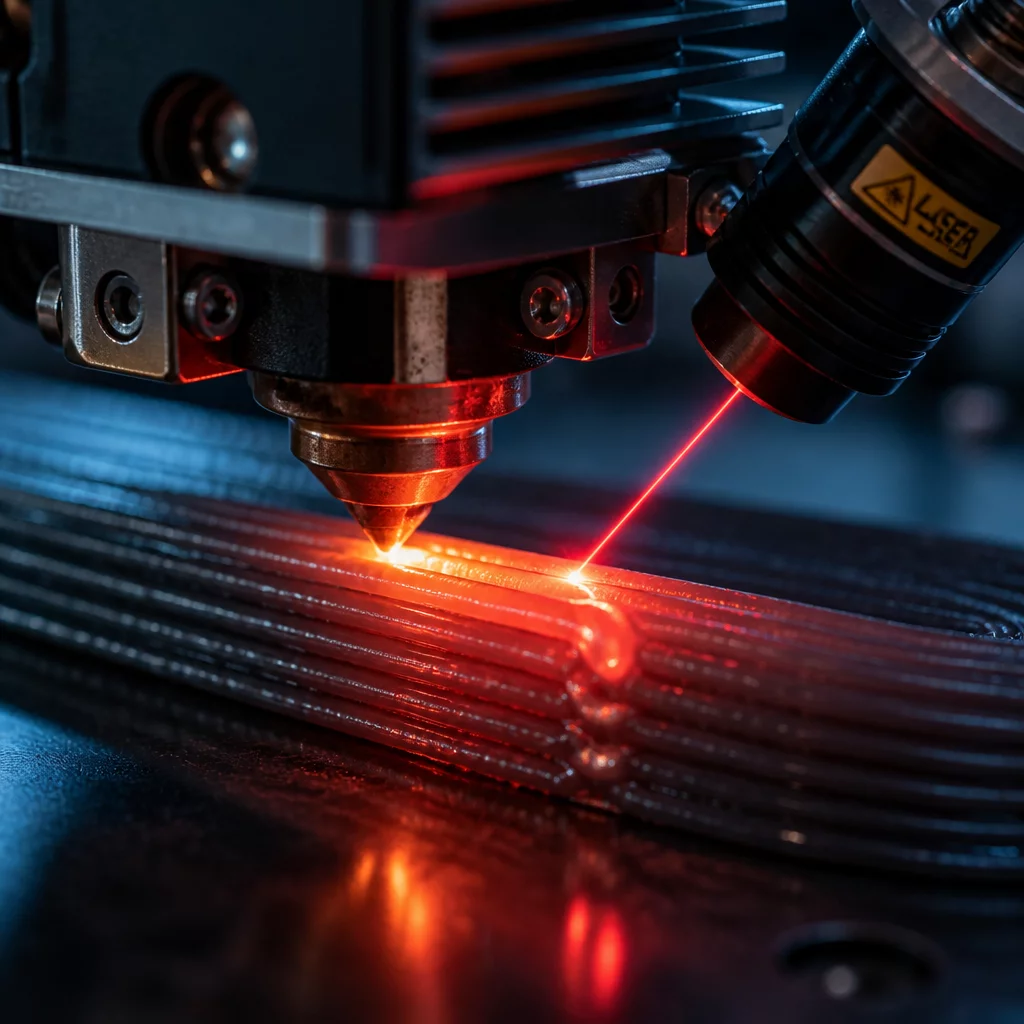
Additive manufacturing has transitioned from a rapid prototyping tool to a high-stakes industrial production method. This evolution necessitates a fundamental shift from traditional post-process inspection to real-time verification. In situ monitoring represents this paradigm shift, utilizing a suite of integrated sensors to observe the build process as it happens. By capturing data layer-by-layer, engineers can identify anomalies such as porosities, delamination, or thermal instability before a part is even finished, potentially saving thousands in material costs and machine time.
The Sensory Modalities of Modern 3D Printing
Integrating sensors directly into the build chamber allows for the continuous evaluation of physical phenomena during the additive process. This methodology, often referred to as in-process monitoring, addresses one of the primary hurdles in the industrial adoption of 3D printing: the inherent variability between machines and build batches. Several distinct sensory modalities are currently used to provide this oversight:
- Optical Melt Pool Monitoring: Utilizing high-speed cameras or photodiodes to analyze the size, shape, and intensity of the melt pool—the region where the energy source fuses the material.
- Thermal Imaging: IR cameras capture the thermal history of each layer, identifying cooling rates that could lead to residual stress or geometric distortion.
- Acoustic Emission: Piezoelectric sensors detect ultrasonic waves generated by phase changes or the formation of cracks within the part during cooling.
- Layer Profilometry: Laser scanners or structured light systems verify the height and uniformity of the powder bed or the deposited layer before the next pass begins.
Real-time Correction and Closed-loop Feedback
The ultimate goal of in situ monitoring is not merely to detect errors but to correct them dynamically. Closed-loop control systems use real-time sensory data to adjust machine parameters—such as laser power, scan speed, or layer thickness—on the fly. If the system detects a melt pool that is too cold, it can instantly increase energy density to ensure proper fusion. This level of responsiveness is critical for mission-critical components in the aerospace and medical sectors, where even microscopic internal defects can lead to catastrophic failure.
The Role of Data Fusion and AI
One of the significant challenges in in situ monitoring is the sheer volume of data produced. A single metal build can generate terabytes of sensory information. Modern facilities are increasingly turning to machine learning (ML) and data fusion techniques to process this information. By correlating melt pool data with thermal maps and acoustic signatures, AI models can predict the mechanical properties of the finished part with remarkable accuracy. This predictive capability is slowly replacing the need for destructive testing, accelerating the certification process for new AM materials and designs.