Bridging the Gap Between Prototype and Production
The expansion of AIM3D into North America signifies a critical maturation of the additive manufacturing market. For years, industrial users have been tethered to expensive, proprietary filaments that often do not match the chemical composition of materials used in final injection molding. By bringing their Composite Extrusion Modeling (CEM) technology across the Atlantic, the German manufacturer is offering a direct solution to this mismatch.
How Pellet Extrusion Changes the Economics
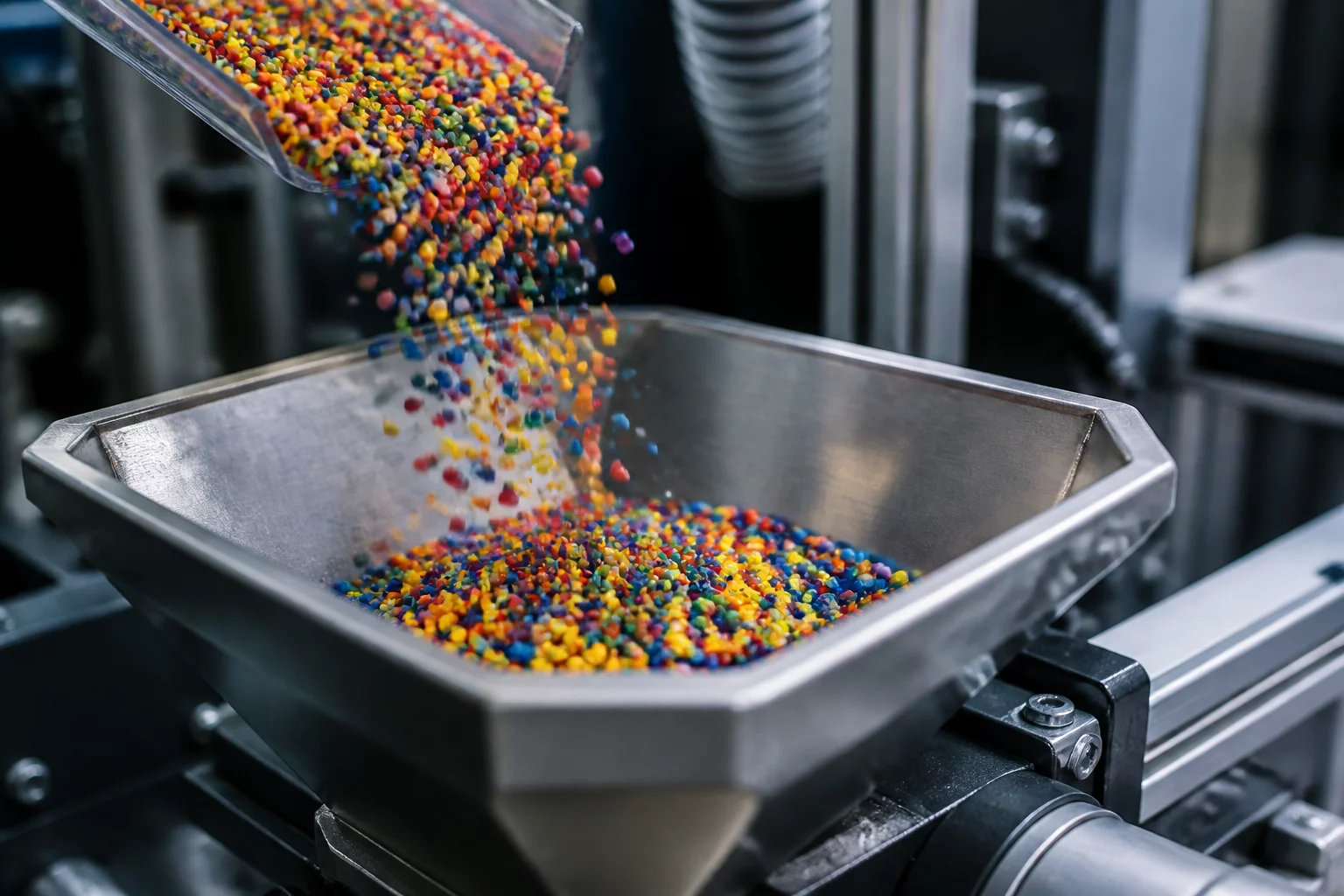
The core innovation lies in the printer's ability to process standard industrial granules. In a traditional setup, plastic must be extruded into a filament before it can be used in a 3D printer, a process that adds significant cost and potential for degradation. AIM3D’s ExAM series bypasses this entirely. Manufacturers can now source materials from their existing suppliers—the same suppliers they use for high-volume injection molding—effectively reducing material expenditures by as much as 70% to 80%.
This cost reduction is not just about saving pennies; it enables the production of larger, more complex parts that were previously cost-prohibitive. It opens the door for small-to-medium enterprises (SMEs) to adopt additive manufacturing for end-use parts, rather than just using it as a tool for visual mockups.
Multi-Material Capabilities: From Plastics to Metals
While many competitors focus solely on polymers, the ExAM systems are designed with versatility in mind. The system's extruder architecture is robust enough to handle filled materials, including metal and ceramic powders suspended in a polymer binder. This allows for a streamlined workflow where a green part is printed using pellets, then debound and sintered in a furnace to create a solid metal component. It is a comprehensive approach that bridges multiple engineering disciplines within a single machine footprint.
As the North American manufacturing sector looks to reshore production and increase supply chain resilience, technologies like pellet-based 3D printing provide the flexibility needed to adapt to changing material availability and market demands. It is a tool for the pragmatic engineer who values consistency and cost-efficiency above all else.