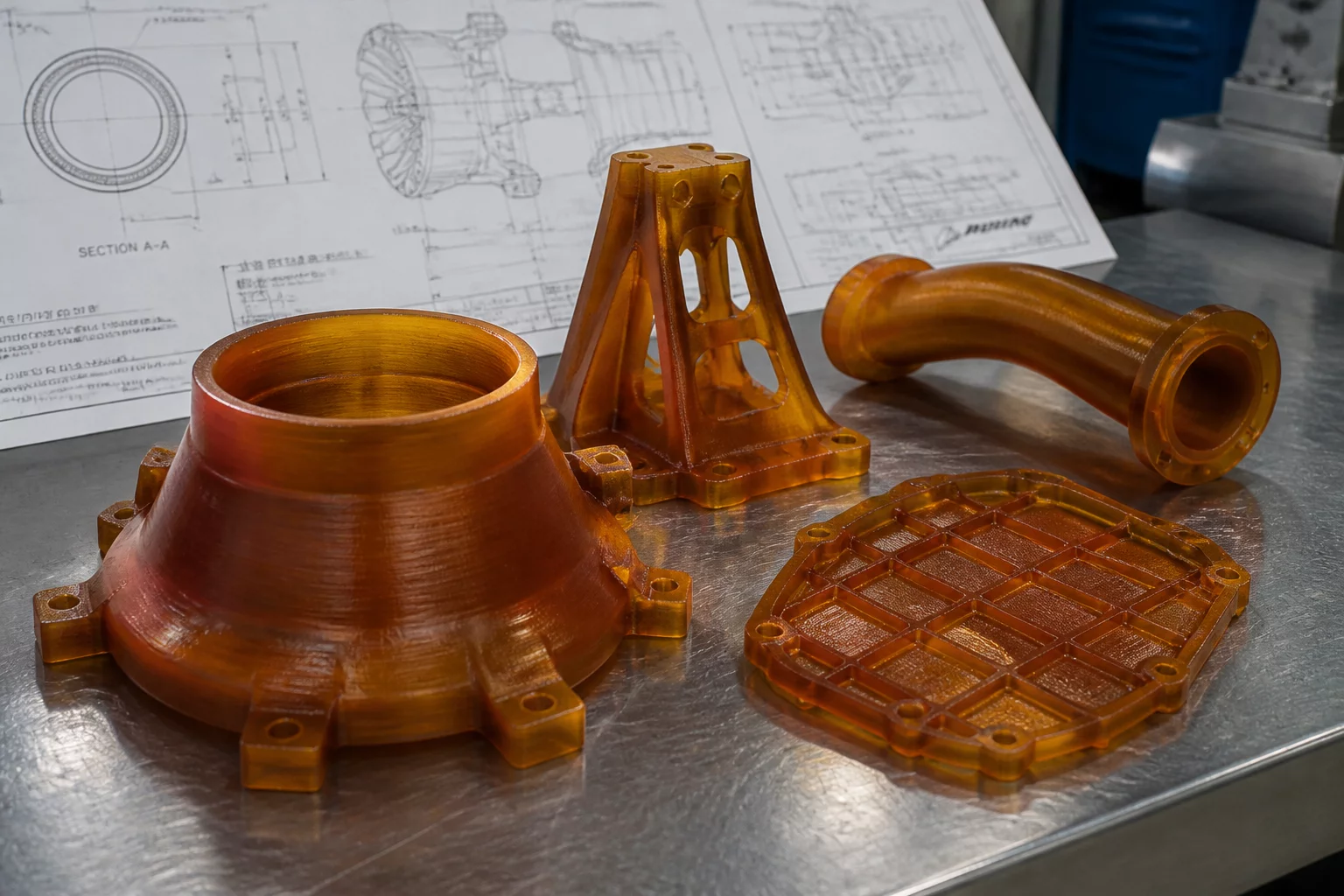
Pushing the Boundaries of FDM Production
Stratasys has officially unveiled a new suite of high-performance materials tailored specifically for the F3300 platform, a move that signals a significant leap forward for industrial-scale Fused Deposition Modeling (FDM). By introducing these advanced polymers, the company aims to bridge the gap between prototyping and full-scale manufacturing, offering engineers tools that were previously restricted to traditional machining or injection molding.
Nylon 12CF: Strength Meets Precision
The headline of this release is undoubtedly the F3300-optimized Nylon 12CF (Carbon Fiber). This composite material combines the chemical resistance and toughness of Nylon 12 with the extreme stiffness of chopped carbon fibers. It serves as an ideal replacement for heavy metal components in aerospace and automotive jigs, fixtures, and end-use parts. The F3300's unique extrusion system allows this material to be deposited with higher accuracy and surface quality than standard FDM machines, significantly reducing the need for post-processing.
"The integration of Nylon 12CF into the F3300 ecosystem allows manufacturers to produce parts that are 40% stronger than standard nylon while maintaining a lightweight profile essential for flight-ready components."
Weather-Resistant ASA for Outdoor Applications
Alongside the carbon fiber composite, Stratasys is rolling out a specialized ASA (Acrylonitrile Styrene Acrylate) formulation. Unlike traditional ABS, ASA is exceptionally resistant to UV radiation and harsh environmental conditions. This makes it the go-to choice for outdoor electrical housings, telecommunications equipment, and agricultural machinery components. Its matte finish also provides a professional aesthetic that meets the cosmetic acceptance criteria often required for consumer-facing industrial products.
Optimization for the F3300 Platform
These materials are not just re-spooled versions of existing filaments. They have been engineered to work with the F3300’s high-speed, dual-extrusion architecture. The system monitors extrusion rates and temperature fluctuations in real-time, ensuring that the internal crystalline structure of the polymers remains consistent throughout the build. This level of process control is critical for meeting stringent quality assessment standards and mechanical property verification in regulated industries.
- Reduced Downtime: Larger material canisters and automatic switching ensure continuous production cycles.
- Enhanced Geometry: Optimized support materials allow for complex internal lattices and overhangs.
- Material Traceability: Every spool comes with digital documentation for aerospace certification.