Innovation in Circular Manufacturing
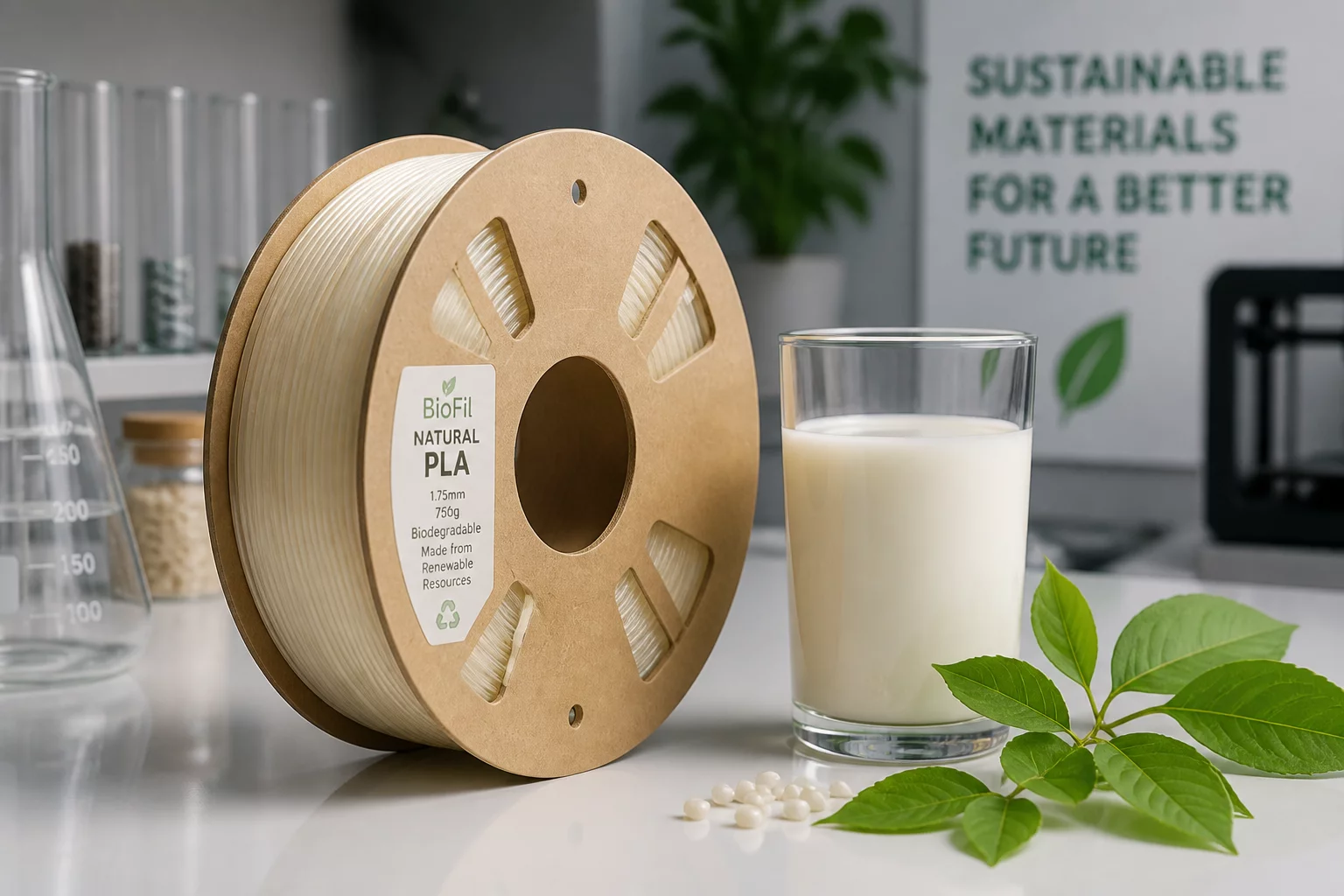
The disposal of expired dairy products presents a major logistical and environmental hurdle for the agricultural industry. However, recent developments in material science have paved the way for transforming these waste streams into functional bioplastics. Researchers have successfully extracted casein proteins from spoiled milk and modified them to create a durable, compostable filament for 3D printing. This breakthrough allows the dairy sector to convert its losses into a valuable feedstock for modern digital fabrication.
Extrusion and Mechanical Stability
The chemical process involves isolating the casein and cross-linking it with eco-friendly agents to improve thermal stability. The resulting polymer is then pelletized and extruded into precision filament. Unlike traditional petroleum-based plastics, this material maintains structural integrity with minimal warping during the printing process. It prints exceptionally well on standard FDM printers, offering a seamless transition for manufacturers looking to reduce their environmental impact without sacrificing part quality.
- Low thermal shrinkage ensures consistent dimensional accuracy for complex geometries.
- The material yields a smooth, matte finish that hides layer lines effectively.
- Casein-based parts are fully biodegradable under industrial composting conditions.
- Renewable source helps manufacturers meet carbon-neutral certification standards.
Scaling for Industrial Use
While the technology is currently in the pilot phase, the results indicate that it is ready for broader adoption. The material exhibits a tensile strength comparable to standard PLA, making it suitable for functional prototyping and consumer goods. As agricultural waste management systems become more centralized, the availability of these bio-polymers will likely increase. This transition represents a vital step toward a circular economy where every waste product serves as the beginning of a new manufacturing cycle.